
Beginner's Guide to Mindful Tea Drinking in Five Simple Steps
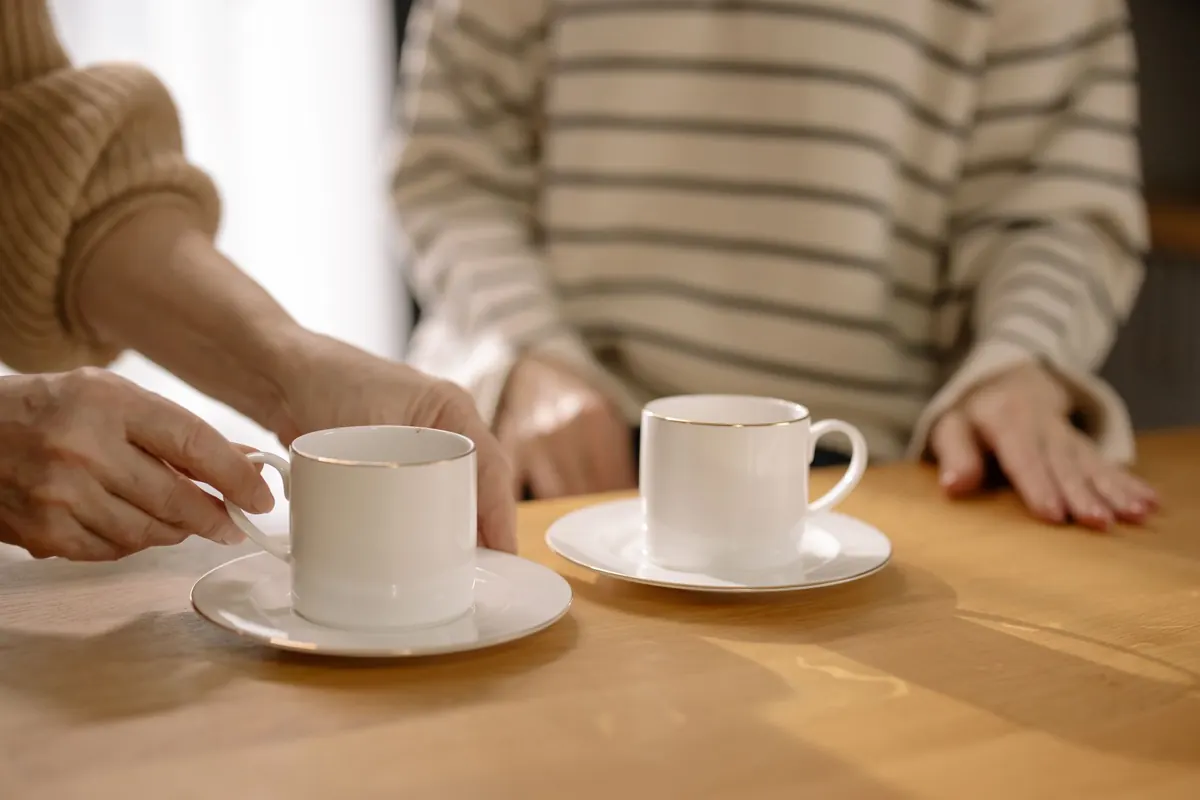
There is a particular quiet that arrives when you stop treating tea as a delivery system for caffeine and start treating it as a small event. The kettle clicks off. Steam rises. The cup warms your hands. For a few minutes, nothing is required of you except to notice.
Mindful tea drinking is not a performance. You do not need a handmade pot, a silent house, or a perfectly timed steep. You need a cup, hot water, and the willingness to slow down just enough to taste what is already there. The five steps below take about five minutes and work best when you repeat them often rather than perfectly.
Think of the practice as a frame around an ordinary habit: prepare, arrive, sense, sip, close. Your attention will wander inside that frame. That is part of it. Each time you notice the wandering, you return to the cup. The return is the practice.
Set Up a Small Space, Not a Ceremony
Clear a surface about the size of a dinner plate. Put your phone in another room or face down and out of reach. Choose a cup you like holding. A mug is fine. Loose leaf is fine. A tea bag is fine. The point is not to acquire anything new; the point is to remove the usual distractions for five minutes.
You will need:
- A kettle or a way to heat water.
- A cup that feels comfortable in your hands.
- Tea you actually enjoy drinking.
- A timer, if you tend to lose track of time.
- A place to sit where both feet can reach the floor.
If you live with other people, tell them you are taking five minutes. If that sounds awkward, take your tea to a window, a balcony, or a chair slightly apart from the main room. A change of position helps signal that this cup is different.
Step One: Choose and Prepare with Attention
Begin with the tea itself. Open the tin or the box and smell it before you measure it. Notice whether the scent is grassy, malty, floral, smoky, or something you cannot name. Put the leaves or bag into the cup and let yourself see the shape and color. This takes ten seconds, but it turns an automatic action into a deliberate one.
Heat the water and listen. A kettle has a whole vocabulary: the first low rumble, the building hiss, the final click. If you use a stovetop kettle, watch the steam rather than your phone. When the water is ready, pour it slowly. Watch the liquid darken, the leaves unfurl, the steam curl upward.
Steeping times vary by tea, so follow the package or your own taste. As a general guide, green and white teas often prefer water that is not fully boiling, while black teas and herbal infusions usually take hotter water. None of this needs to be exact. The practice is in the attention, not the precision.
Step Two: Arrive at the Cup
Before the first sip, sit down. Feel the chair beneath you. Put both feet flat on the floor. Let your shoulders drop without forcing them. Hold the cup with both hands if that feels natural. Notice the weight and the warmth. If the cup is too hot, rest it on the table and place your palms on either side.
Take three slow breaths. You do not need to breathe in a special way. Just let the inhale be a little longer than usual, and let the exhale be complete. On the third exhale, let your attention settle on the cup. If your mind is already reviewing your to-do list, that is normal. You are not failing; you are arriving.
This step creates a boundary. The preparation is done. The drinking has not started. For a few seconds, you are simply here with a warm cup and a quiet moment.
Step Three: Engage the Senses
Mindfulness does not require you to empty your mind. It asks you to notice what is already coming in through your senses. Tea is generous in this regard: it gives you several things to notice at once. Use the list below as a set of anchors, not a checklist to rush through.
- Sight: Look at the color of the tea, the light on the surface, the steam.
- Smell: Bring the cup near your face and inhale. Notice how the scent changes as the tea cools.
- Touch: Feel the warmth of the cup, the texture of the glaze, the weight in your hands.
- Sound: Listen to the room. A clock, traffic, birds, the fridge, your own breathing.
- Taste: Take a small sip and let it sit on your tongue. Notice where you taste it and how it changes.
You do not have to do all five at once. Choose one sense for this cup. Maybe today is a smell day. Tomorrow is a taste day. The practice stays fresh when you give yourself one clear anchor rather than a crowd of instructions.
Step Four: Sip Slowly and Notice the Urge to Rush
Take the first sip slowly. Do not gulp. Let the tea cool slightly on your tongue. Notice the temperature, the texture, the first flavor and then the aftertaste. Put the cup down between sips. This small pause is where much of the practice lives. When you put the cup down, you give yourself a moment to notice what is happening before the next sip.
You will probably feel the urge to speed up. The mind may say, "This is nice, but I should check my messages," or "I have too much to do for this." Notice that urge without arguing with it. Label it quietly: rushing. Then return to the cup. If you get distracted and drink half the tea without noticing, that is not a failure. The moment you notice is the moment you begin again.
When your mind wanders
Wandering is not a problem to solve. It is the moment you practice returning. Use a simple phrase: "Thinking." Then feel the warmth of the cup, take one breath, and take the next sip. You may do this ten times in one cup. That is ten returns. That is a good practice.
Step Five: Close with a Pause
When the cup is empty, set it down. Do not jump up immediately. Sit for thirty seconds and notice the aftertaste. Notice the temperature of your hands. Notice the quality of the room. Ask yourself one quiet question: What changed? The answer may be small: my shoulders are lower, my breathing is slower, the light looks different.
If you like, end with a simple sentence of appreciation. It can be secular and plain: "That was a good cup." Or "I am glad I stopped." You do not need a formal gratitude practice. A single honest sentence is enough to mark the end of the ritual and help you carry the pause into the next thing you do.
Make It a Daily Habit Without Making It a Chore
The easiest way to build this practice is to attach it to something you already do. Choose one cup a day and make that your mindful cup. Morning tea before email. Afternoon tea before the next task. Evening herbal tea after dinner. The same cup at the same time reduces the need for decision-making.
Keep it short. Five minutes is plenty. If you miss a day, begin again the next day without commentary. If you have a week of rushed cups, choose one cup to slow down with and let the others be ordinary. The practice is not a test of consistency; it is a way to come back to your senses.
A final practical note: if you are sensitive to caffeine, choose a herbal infusion or a milder tea, and avoid drinking strong tea close to bedtime. If you take medication or have a health condition, ask a pharmacist or doctor about caffeine and herbal teas rather than guessing. Mindfulness is a useful companion to ordinary care, not a replacement for it.
Start with the next cup you make. Smell the leaves. Listen to the water. Sit down before the first sip. Notice one thing. Return once. That is enough for today.
Photo: cottonbro studio / Pexels